By Elvira Hattingh
With an estimated 73 million abortions taking place each year—often cited as the leading cause of death worldwide—and assisted dying laws steadily expanding across the globe, a profound divide is emerging. On one side stand legal systems built on human autonomy. On the other stands the enduring Christian belief that life, from its very beginning to its natural end, belongs to God alone.
In March 2026, Spain was thrust into a debate after 25-year-old Noelia Castillo Ramos died by legal euthanasia near Barcelona. She had endured severe mental illness and trauma from sexual violence, and a 2022 suicide attempt left her paraplegic. Under Spain’s euthanasia law, she applied for assisted death. Her family fought the decision through multiple courts, arguing that she lacked sound mental capacity and proper care—but all appeals failed. On 26 March 2026, she died alone, by choice.
Her case quickly drew international attention. Critics described it as a “social defeat” and a “collective failure,” arguing that a vulnerable young woman was offered death instead of deeper care and healing.
Persecuted for Praying Silently
At the same time, the United Kingdom has become a focal point for a different kind of controversy.
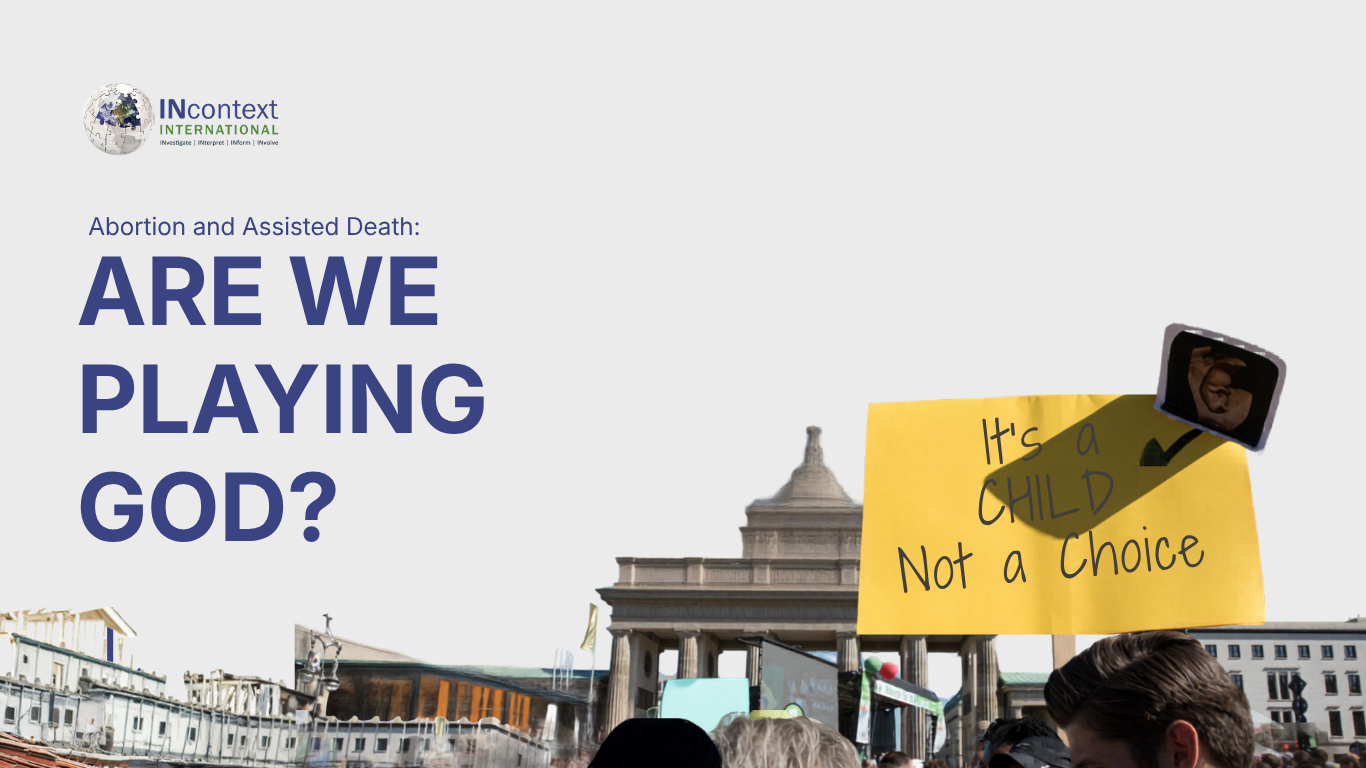
Isabel Vaughan-Spruce, a Christian volunteer and director of March for Life UK, faces criminal charges for silently praying near an abortion clinic in Birmingham. Between June and November 2025, she stood within a buffer zone—saying nothing, holding no signs, simply praying in her mind. Authorities charged her under the Public Order Act, arguing that her presence could influence decisions about abortion services. She pleaded not guilty in January 2026.
Across Europe—especially in the UK—there have been several recent examples where Christians have faced arrest, fines, or court proceedings for peaceful actions related to abortion or assisted dying. These include a British Army veteran convicted for silently praying for his aborted son, a 75-year-old Scottish grandmother charged for holding a gentle sign offering help, a retired Baptist pastor due in court for preaching the gospel near a hospital offering abortions, and dozens of peaceful demonstrators arrested in France in 2026 while protesting assisted-dying legislation. New legal frameworks are also beginning to criminalise attempts to dissuade individuals from euthanasia.
The Global Numbers
Globally, abortion remains one of the most debated and statistically significant phenomena.
The World Health Organization (WHO) estimates that approximately 73 million induced abortions occur worldwide each year—around 200,000 per day. Some organisations and platforms present this as the leading “cause of death” globally, exceeding all other causes combined.
Yet this classification is not universally accepted. Mainstream public health systems, including the WHO and the Global Burden of Disease study, do not include abortion in official causes-of-death statistics. Their data tracks only deaths of live-born individuals using death certificates and internationally standardised medical classifications.
In 2021, global deaths totalled about 68 million, with the leading causes being ischaemic heart disease (9.1 million), COVID-19 (8.8 million), stroke (6.8 million), and chronic respiratory diseases (3.4 million). After the COVID-19 peak, total deaths have dropped to around 60 million annually.
This creates a stark contrast: while abortion numbers exceed any single category, they are excluded entirely from official mortality rankings. The difference lies in a fundamental philosophical divide—whether unborn life is counted in the same category as postnatal human life.
Europe accounts for roughly 3.3 million abortions annually—only about 4–5% of the global total. The global “epicentre” is Asia, where population size and higher unintended pregnancy rates drive significantly larger numbers. When measured by rate (abortions per 1,000 women), some regions in Africa, Latin America, and Eastern Europe rank higher, even if total numbers are smaller.
Most European countries allow abortion on request only up to 10 to 14 weeks. The most liberal frameworks—such as in the United Kingdom and the Netherlands—extend this to around 24 weeks, roughly the point of viability. After that, abortions are permitted only under strict medical conditions.
Recent years have seen pushes for more liberal access. France, for example, enshrined abortion as a constitutional “guaranteed freedom” in 2024, whilst the UK decriminalised abortion for women themselves in 2025, removing criminal penalties.
Spread of Assisted Dying
The “right to die” movement is also expanding globally. Europe played a pioneering role, with countries like Switzerland, the Netherlands, and Belgium leading early legalisation. Today, assisted dying is legal in a limited number of countries and eligibility remains tightly controlled.
In the Netherlands, euthanasia accounted for 10,341 deaths in 2025—around 6% of all deaths. Belgium reported 4,486 cases, approximately 4% of deaths. Other countries, such as Spain and Luxembourg, report lower numbers. Globally, the movement is growing, with significant expansion in North America and Oceania.
Churches Standing Firm
As missionaries who walk alongside the broken and the dying, we see this conviction lived out daily: across Christian denominations—Catholic, Orthodox, and Evangelical—there is a shared conviction that all life belongs to God. From this perspective, human life—whether unborn, disabled, or elderly—carries inherent dignity because it is created in the image of God.
Many Christian voices therefore reject the idea that individuals have a “right” to deliberately end life. Instead, they emphasise compassionate care: strong palliative medicine, emotional support, and human accompaniment through suffering.
Scriptures often quoted in support of this belief include:
● “For you created my inmost being; you knit me together in my mother’s womb” (Psalm 139:13–16).
● “The Lord gave, and the Lord has taken away” (Job 1:21).
● “I put to death, and I bring to life” (Deuteronomy 32:39).
● “Whoever sheds human blood… for in the image of God has God made mankind” (Genesis 9:5–6),
Across Europe, major Christian bodies have consistently opposed the expansion of abortion rights. The Commission of the Bishops’ Conferences of the European Union (COMECE) has repeatedly rejected attempts to frame abortion as a fundamental human right, calling such efforts “gravely contrary to moral law.” They stress that “women should never feel compelled to abort” due to social or economic pressures.
Evangelical organisations, such as the European Evangelical Alliance, echo this stance, emphasising that both the mother and the unborn child possess inherent value.
Death Isn’t Caring
Similarly, churches strongly oppose assisted dying. The French Bishops’ Conference stated in January 2026: “We do not care for life by giving death.” They warned that euthanasia blurs ethical boundaries and undermines true compassion. Orthodox leaders have declared: “Human beings need care, not death”, cautioning that legalisation risks turning a “right to die” into a “duty to die”.
These voices consistently frame both abortion and euthanasia as part of a broader “throwaway culture” that risks discarding the vulnerable. In response, they advocate for life-affirming alternatives: strengthened palliative care that effectively relieves pain and preserves dignity, comprehensive mental health support, practical and emotional assistance for mothers in crisis pregnancies, and a renewed commitment to human accompaniment—ensuring that no one faces suffering, disability, or the end of life in isolation, but is met with compassion, care, and meaningful support.
Across Europe, Christians engaging in peaceful protest—whether through silent prayer, vigils, or demonstrations—have faced legal consequences. Arrests in France, prosecutions in the UK, and growing restrictions around “buffer zones” all point to increasing tension between law and conscience.
At the same time, there are notable exceptions. In countries like Germany and Austria, courts have ruled in favour of pro-life vigils, striking down or limiting buffer zones and affirming the right to peaceful expression.
Prayer Points:
● Pray for the vulnerable—that those facing crisis, trauma, or suffering will receive true care, hope, and support instead of being led toward death.
● Pray for bold and protected Christian witness—that believers may stand firm in truth, with wisdom and courage, even amid legal pressure or opposition.
● Pray for hearts and leaders—that societies and governments will recognise the value of every human life and choose compassion, dignity, and life-affirming care.
Sources:
https://www.who.int/news-room/fact-sheets/detail/the-top-10-causes-of-death
https://www.who.int/publications/i/item/9789240096394
https://www.thelancet.com/journals/lancet/article/PIIS0140-6736(24)00585-8/fulltext
https://english.euthanasiecommissie.nl/the-committees/annual-reports
https://adfinternational.org/en-gb/news/christian-woman-criminally-charged-for-silent-prayer-pleads-not-guilty-in-first-hearing
https://www.comece.eu/
https://www.osvnews.com/we-do-not-care-for-life-by-giving-death-french-bishops-say-ahead-of-assisted-dying-bill-move/