By Lauren Sedemeester
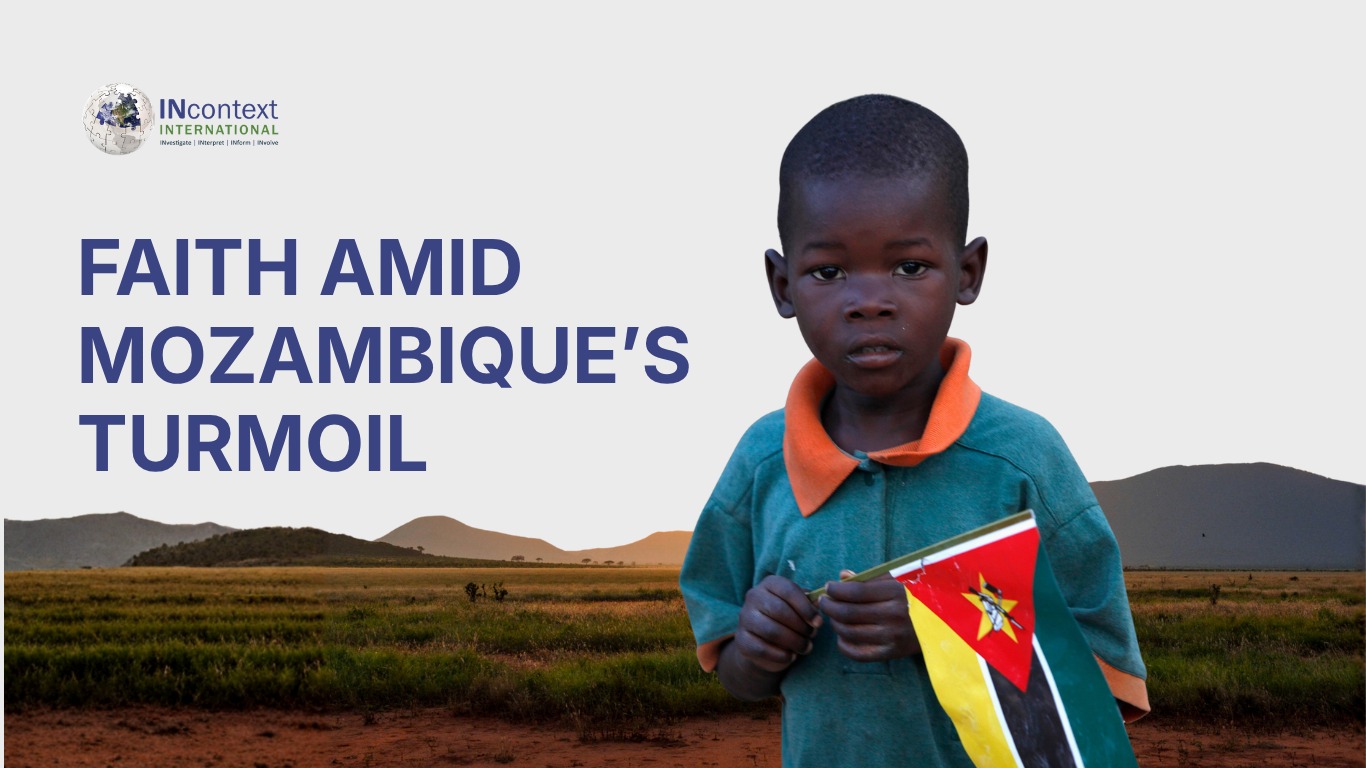
For many years, Mozambique has been known for peaceful religious coexistence with Christians, Muslims, and followers of traditional beliefs living side by side. In recent years, a violent insurgency in Cabo Delgado has threatened this fragile harmony.
Freedom of religion is guaranteed in the Constitution, and the government generally respects this right in practice. Christianity has spread across many regions and among diverse communities, sustained in part by missionaries and local leaders. According to the Joshua Project, 45.8% of the population identify as Christian, 36.1% follow ethnic religions, and 14.1% are Muslim. However, the rise of an Islamist insurgency in the northern province of Cabo Delgado has increasingly affected Christians. Mozambique now ranks as the 39th most dangerous country in which to be a Christian, highlighting the country’s history of religious tolerance and growing insecurity in the north.
Historical Presence of Islam
Historically, Islam reached the East African Swahili Coast through trade networks across the Indian Ocean. By the 10th and 11th centuries, Muslim trading communities were established along Mozambique’s northern coastline, particularly in Cabo Delgado and Nampula. Over time, these communities became deeply rooted in local society, and in several northern districts, Muslims today form a significant share of the population.
These coastal communities played an important role in regional trade in gold, ivory, and other goods, linking the interior of southern Africa to wider Indian Ocean markets.
Portuguese colonial expansion in the 16th century did not eliminate Islam, and it remained firmly established in northern coastal regions. Mozambique today is religiously diverse, with Christians forming the majority and Muslims concentrated in the north. Despite these differences, peaceful coexistence between Muslims, Christians, and followers of traditional beliefs has historically characterised much of the country’s religious life. This is still evident in many parts of southern Mozambique today.
Christian-Muslim Relations in the South
While Islam has historically been concentrated in the northern coastal regions, relations between Christians and Muslims in the south remain largely peaceful. A missionary who has lived in Maputo Province, specifically in Moamba District, for eight years, described the Muslim community in southern Mozambique as numerous but not highly visible in everyday life.
“You don’t often see people dressed in traditional Islamic clothing except during periods such as Ramadan,” she said. Mosques are common, though some attend mainly for practical reasons such as receiving food, and some businesses briefly close for daily prayers.
Regarding life as a Christian in southern Mozambique, she emphasised that it is generally safe. “Unlike the north, living as a Christian here poses no danger. There are churches, and the relationship between Christians and Muslims is amicable. We get along well,” she noted.
She added that challenges sometimes come from the Europeans who may reject Christianity, rather than from Muslims, and that local practices such as witchcraft occasionally cause conflict. The northern insurgency has had little impact on southern churches, which remain largely safe.
Rise of Islamist Insurgency in the North
While many parts of Mozambique continue to experience peaceful religious coexistence, the situation in the north tells a different story. Northern provinces such as Cabo Delgado have been devastated since 2017 by an Islamist insurgency, which began with attacks on police stations and villages. The group, commonly known as Ahlu Sunnah wa-Jama (sometimes locally referred to as Al-Shabaab, though not connected to the Somali organisation), later pledged allegiance to the Islamic State around 2019. Since then, insurgents have carried out brutal attacks on villages—including killings, beheadings, and kidnappings.
The violence has displaced more than one million people, destabilising the region and threatening major natural gas projects along the coast. The rise of the insurgency appears to be driven by both internal and external factors. Locally, analysts point to deep poverty, corruption, and long-standing marginalisation in Cabo Delgado, as well as grievances over the distribution of wealth from natural resources such as gas and rubies. These conditions have created fertile ground for radicalisation and recruitment among disaffected youth.
At the same time, the movement has developed links with militant networks in Tanzania, the Democratic Republic of the Congo, and other parts of East Africa, suggesting external influence through fighters, funding, and ideological support. In response to the escalating violence, Mozambique has received military assistance from Rwanda and the Southern African Development Community, highlighting the regional concern over the insurgency and its impact on stability.
Impact on Christian Communities
The insurgency has affected Christian in Cabo Delgado, destroying churches and homes and forcing residents to flee. Clergy and missionaries relocated to Pemba, while hundreds of thousands joined the displaced, creating a humanitarian crisis of over a million people.
A South African missionary who previously lived in north-western Mozambique described how the violence disrupted ministry. “We had to extract our disciples and our teams for six months when al-Shabaab infiltrated our province about two years ago,” he said.
He added: “The rise of the insurgency has mostly occurred in a Muslim area. They have attacked Muslim villages as well, but especially wherever there is a church, the churches were burnt down. It has been dangerous for foreign missionaries, and Christians have been killed for their faith.”
This harsh reality, combined with extreme poverty, has put many communities in difficult situations. Joshua, a local Christian and friend of InContext, highlights how these pressures have affected church leaders and members in some cases. He explains: “I know of more than fifteen pastors who have joined Islam along with their church members because they were offered financial support by Muslim imams. Bear in mind that Mozambique is one of the poorest countries in the world.”
Despite these challenges, churches and Christian organisations continue to provide aid, shelter, and pastoral support to those affected, remaining central to both humanitarian relief and spiritual care.
Challenges Within the Church
The Church also faces internal challenges, including a pressing need for stronger discipleship. Many congregations lack deep biblical teaching, leaving believers vulnerable to syncretism or false teachings.
A missionary in north-western Mozambique noted that the insurgency disillusions people with Islam as radicals attack both Christian and Muslim communities, and displaced people often seek help from Christian organisations. He added, “I think complacency, little knowledge of the Bible, and lack of discipleship are the biggest challenges in the church.”
Despite these challenges, Mozambique’s Christian community continues to grow. Missionaries, pastors, and local leaders remain committed to strengthening the Church and discipling new believers, and many people continue to give their lives to Christ—even amid ongoing challenges.
Amid both conflict and opportunity, the Church in Mozambique continues to stand as a witness of faith, compassion, and hope.
Please join us in praying for the Church in Mozambique:
- Pray for the safety of Christians, churches, and communities affected by the insurgency in Cabo Delgado and northern provinces, asking God to end the violence and bring refuge and strength to the displaced.
- Pray for pastors, missionaries, and church leaders that God equips them with wisdom, courage, and insight to disciple and guide believers amid challenges like poverty and false teachings.
- Pray for peaceful relations among Christians, Muslims, and followers of traditional religions, asking God to soften hearts, heal divisions, and foster unity and understanding.
Sources:
https://acninternational.org/christians-are-suffering-greatly-in-mozambique-says-passionist-priest/
https://acnuk.org/news/2024/02/14/mozambique-clergy-forced-flee-and-churches-burnt-violence-intensifies
https://apnews.com/article/mozambique-displaced-violence-cabo-delgado-militants-180cecc43e76a7a54aa30eb0822beded
https://en.wikipedia.org/wiki/Islam_in_Mozambique
https://en.wikipedia.org/wiki/Muatide_massacre
https://en.wikipedia.org/wiki/Religion_in_Mozambique
https://en.wikipedia.org/wiki/Xitaxi_massacre
https://joshuaproject.net/countries/MZ
https://www.aciafrica.org/news/10336/catholic-bishop-in-mozambique-reports-of-mass-exodus-as-islamists-attack-villages
https://www.acnireland.org/journal/2024/2/15/communities-and-churches-attacked-as-insurgency-intensifies-in-cabo-delgado-in-mozambique
https://www.britannica.com/place/Mozambique/Religion
https://www.dw.com/en/mozambique-jihadists-from-abroad-pour-into-cabo-delgado/a-68623366
https://www.opendoorsuk.org/persecution/world-watch-list/mozambique/
https://www.reuters.com/world/africa/mozambiques-president-says-northern-town-under-islamist-attack-2024-05-10/
https://www.theguardian.com/world/2020/apr/22/islamist-group-kills-52-in-cruel-and-diabolical-mozambique-massacre
https://www.theguardian.com/world/2025/dec/25/displaced-islamic-state-insurgency-mozambique