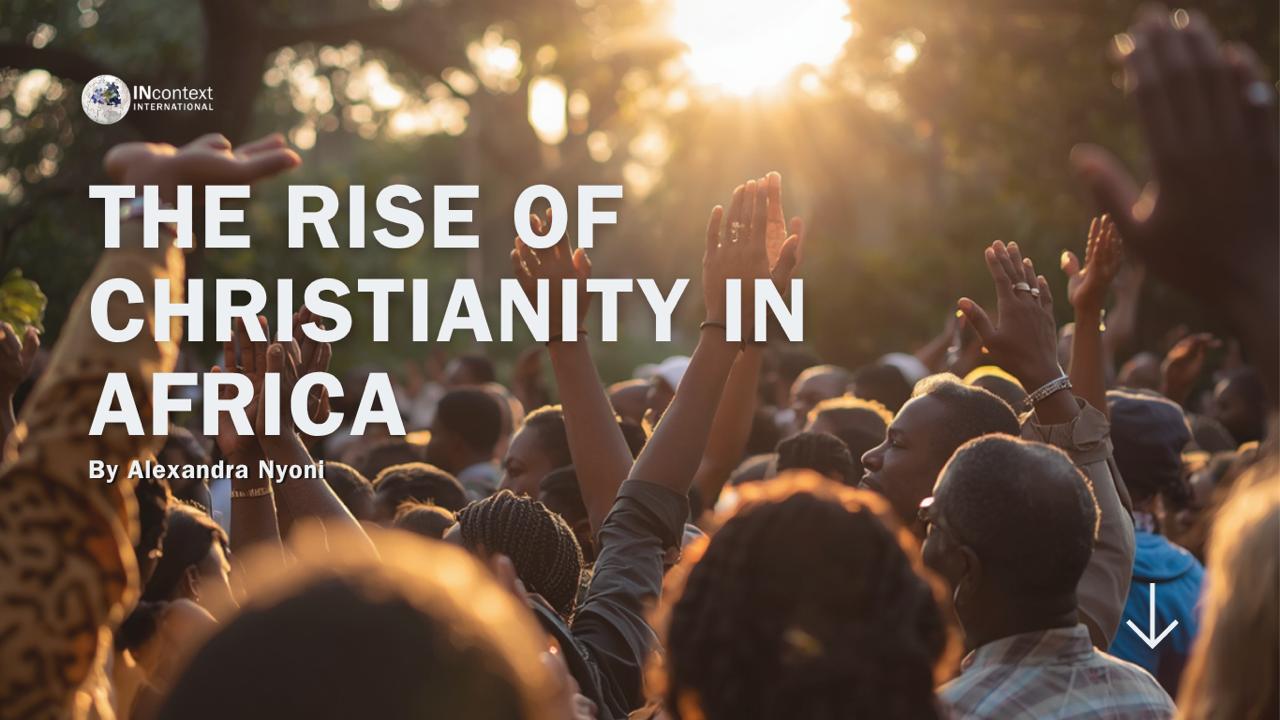
The Rise of Christianity in Africa
By Alexandra Nyoni
Africa is rapidly becoming the centre of global Christianity. Over the last century, the continent has experienced one of the most rapid religious shifts in modern history. In 1900, Africa had an estimated 10 million Christians. Today, that number has grown to over 685 million, with some estimates placing it close to 700 million believers across the continent. Sub-Saharan Africa now contains a larger share of the world’s Christians than Europe, a significant reversal from previous generations.
This growth reflects more than just a population increase. Christianity in Africa has become deeply woven into the continent’s social, political, and cultural life. African churches are participating in shaping global theology, sending missionaries abroad, influencing politics, and driving humanitarian efforts.
Yet, despite the rapid growth of Christianity in modern Africa, many assume the religion arrived solely through European colonialism. However, this is far from historical reality.
Christianity’s Ancient Roots in Africa
Christianity has existed in Africa since the earliest centuries of the faith. According to historical records, the gospel spread south into Africa almost immediately after the death and resurrection of Jesus. Alexandria, Egypt, became one of the most important centres of early Christian learning, and Ethiopia adopted Christianity as a state religion in the fourth century under King Ezana.
The Bible itself records an encounter between the apostle Philip and an Ethiopian official in the Book of Acts, a passage many Christians view as symbolic of Africa’s early inclusion in the Christian story. African theologians also played a central role in shaping Christian doctrine. Influential church fathers such as Augustine, Tertullian, Origen, and Cyprian all came from North Africa and contributed significantly to Christian theology and the development of the early church.
The BBC’s historical overview of Africa also notes that Christianity spread through North and East Africa long before European colonial expansion. While colonial missions undeniably accelerated Christianity’s reach into many parts of sub-Saharan Africa during the nineteenth and twentieth centuries, the religion already possessed deep African roots centuries earlier.
Why Christianity Is Growing So Rapidly
Several factors help explain Christianity’s extraordinary growth across Africa today.
One of the most significant reasons is demographics. Africa has the youngest and fastest-growing population in the world. As populations expand, religious communities also grow. Christianity has benefited from high birth rates in many African countries, particularly in sub-Saharan Africa.
Christianity has also expanded because churches frequently provide practical support where governments struggle. Across Africa, churches operate schools, hospitals, feeding programmes, refugee assistance initiatives, and job training programmes. In regions affected by conflict, poverty, or political instability, churches often function as both spiritual and social safety nets.
Urbanisation has further accelerated growth. As millions of Africans move into rapidly expanding cities, churches create new forms of community and identity.
At the same time, African Christianity has become increasingly indigenous. Rather than simply copying European traditions, African churches have adapted worship, music, language, and leadership structures to local cultures. This has helped Christianity feel authentically African rather than foreign.
This integration has also led, however, to challenges within some African Christian churches. The mix of traditional religious practices, such as ancestor worship or animism, sometimes creeps into what are considered African Christian churches.
Where Christianity Is Growing Most Rapidly
The fastest growth is occurring in sub-Saharan Africa. Countries such as Nigeria, Kenya, Uganda, Ghana, the Democratic Republic of Congo, and Tanzania have seen especially dramatic expansion in recent decades.
Pentecostal and evangelical movements have spread rapidly in urban areas, while historic denominations such as Catholicism and Anglicanism also continue to grow. In some regions, Christianity is expanding alongside Islam, creating both cooperation and tension depending on local contexts.
How Christianity Has Shifted African Society
Christianity has profoundly shaped African society in both positive and controversial ways.
One major impact has been education. Mission churches established many of Africa’s earliest schools and universities during the colonial period. Literacy often spread through Bible translation projects and Christian education efforts. In many countries, church-run schools still play a major role in national education systems.
Christianity has also influenced healthcare. Hospitals and clinics established by Christian organisations continue to serve millions of Africans, especially in rural areas where public healthcare is limited.
Politically, churches have sometimes acted as powerful advocates for justice and democracy. In South Africa, for example, many Christian leaders played key roles in resisting apartheid. Across the continent, churches have frequently spoken out against corruption, violence, and authoritarian rule.
At the same time, Christianity’s influence has not been without tension. Critics argue that some missionary movements contributed to the erosion of indigenous religions and cultural practices during the colonial era. Contemporary debates around gender, sexuality, prosperity theology, and political influence continue to shape discussions about Christianity’s role in African society.
Nigeria: A Global Christian Powerhouse
Nigeria is home to one of the largest Christian populations in the world. The country is religiously divided between a predominantly Muslim north and a largely Christian south, making religion a major force in national politics and social life.
Nigeria has become especially known for its powerful Pentecostal movement. Nigerian pastors now lead churches across Europe, North America, and Asia, reversing the traditional direction of missionary activity.
However, Nigeria also faces serious religious tensions. Extremist violence from groups such as Boko Haram has targeted Christian communities in parts of the country, highlighting the complex relationship between faith, politics, and security.
Ethiopia: One of Christianity’s Oldest Nations
Ethiopia occupies a unique place in Christian history. Christianity has existed there for at least 1,600 years, making Ethiopia one of the oldest continuously Christian nations in the world.
The Ethiopian Orthodox Church remains central to the country’s religious identity and cultural heritage. Ancient churches carved into rock, centuries-old manuscripts, and distinctive liturgical traditions demonstrate the depth of Ethiopia’s Christian history.
In recent decades, Ethiopia has also experienced rapid Protestant and evangelical growth, particularly among younger generations. Pentecostal churches have expanded significantly in urban areas, creating a more diverse Christian population.
South Africa: Faith and Social Transformation
South Africa presents a complex picture of Christianity’s role in society. Christianity is the country’s dominant religion, but its history is closely tied to both colonialism and resistance.
Today, South Africa is home to a diverse Christian landscape that includes historic denominations, African independent churches, and rapidly growing Pentecostal movements. Churches continue to play influential roles in discussions about inequality, poverty, violence, and national identity.
South Africa also reflects broader tensions within modern African Christianity, balancing traditional beliefs, political activism, and contemporary social change.
The Future of Global Christianity
The future of Christianity is increasingly African. As church attendance declines across much of Europe and North America, African Christianity continues to expand in both numbers and influence. African theologians, pastors, missionaries, and worship movements are shaping global Christianity in profound ways. Yet this growth also brings responsibility. The challenge facing the African church is not only to grow in size, but also to remain rooted in biblical truth, spiritual maturity, and faithful witness in this day and age. From its ancient Christian foundations to its expanding global influence today, Africa is no longer simply a mission field–it has become one of the leading centres of the Christian world.
Please join us in prayer:
- Pray for the African Church to remain rooted in biblical truth, spiritual maturity, and faithful discipleship.
- Pray for protection, strength, and peace for Christians facing persecution and violence across Africa.
- Pray for church leaders to influence society with wisdom, integrity, and compassion.
- Pray that African Christians would continue to impact the global church through missions, evangelism, and faithful witness.
Sources:
https://www.statista.com/statistics/1368604/christian-population-in-africa-by-country/
https://www.thegospelcoalition.org/article/good-theology-africa/
https://www.pewresearch.org/religion/2025/06/09/religion-in-sub-saharan-africa/
https://www.washingtonpost.com/world/2025/06/09/islam-christianity-global-population-pew-survey/