By Elvira Hattingh
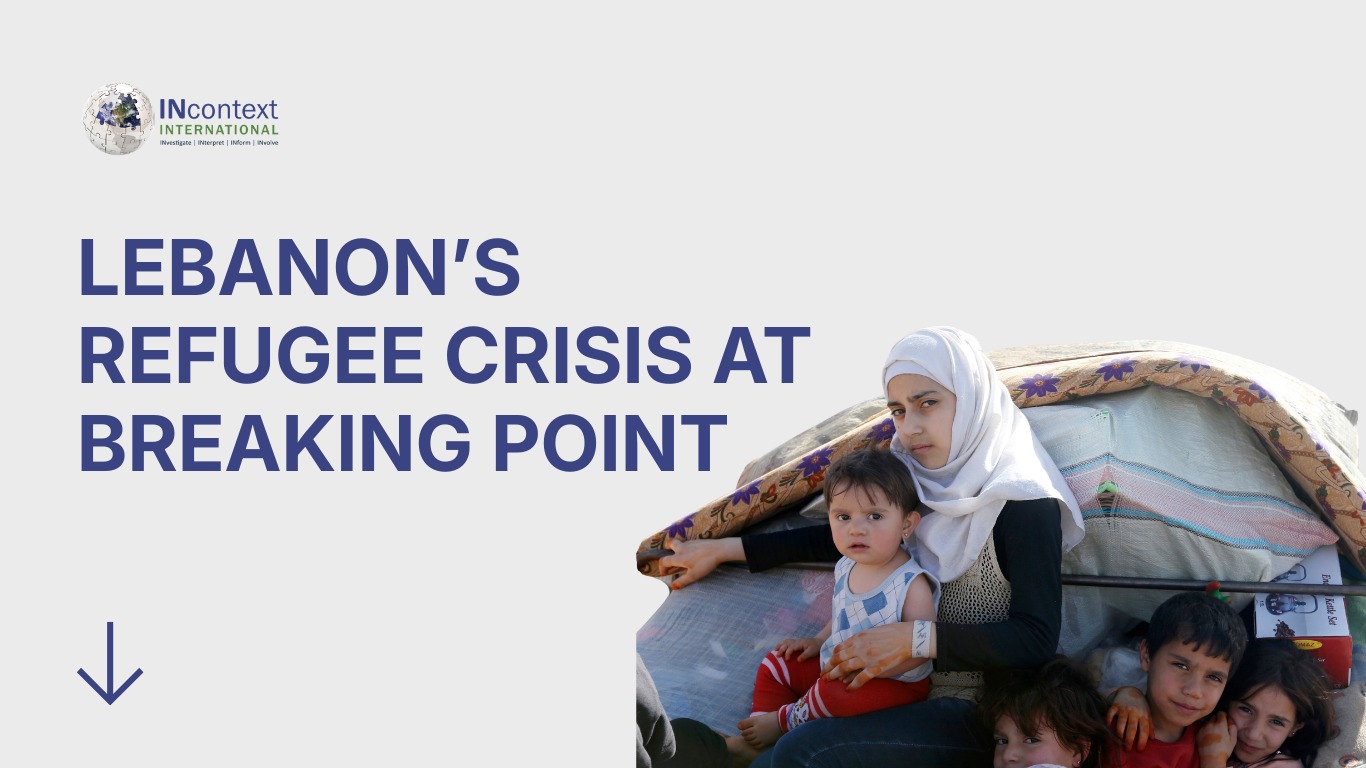
Lebanon is facing a humanitarian shock that could push the country toward state collapse: the sudden displacement of nearly 700,000 people in just a few days, layered onto an existing population of around 1.8 million refugees already living in the country. For a nation of roughly 5.5 million people, this convergence of crises is stretching fragile institutions, infrastructure, and social cohesion to the breaking point.
The latest wave of displacement began after the escalation of hostilities between Israel and Hezbollah in early March 2026. On 2 March, the Israeli military issued evacuation warnings for residents of more than 53 villages and densely populated areas across southern Lebanon and Beirut’s southern suburbs. The warnings were followed by heavy airstrikes targeting what Israel claimed were Hezbollah positions, forcing civilians to flee within minutes.
The humanitarian impact has escalated rapidly. As of 10 March 2026, more than 667,000 people had been displaced, according to Lebanese authorities and the UN Refugee Agency. Many fled with little more than the clothes they were wearing, seeking safety in Beirut, Mount Lebanon, northern districts, and parts of the Bekaa Valley.
The conflict has already taken a significant human toll. According to the World Health Organization, 486 people have been killed and 1,313 injured, including 259 children, with at least 84 children among the dead. Hospitals and emergency services are struggling to cope as casualties continue to rise.
Health infrastructure is under extraordinary strain. Five hospitals are now completely out of service, four others have been partially damaged, and 43 primary healthcare centres have closed, most located in southern Lebanon, where evacuations have been widespread.
At least 120,000 displaced people are currently sheltering in government-designated collective sites, many of them schools or municipal buildings. Others are staying with relatives or sleeping in cars and on sidewalks while searching for accommodation.
Karolina Lindholm Billing, UNHCR Representative in Lebanon, described the speed and scale of displacement as unprecedented. “Lives have been upended on a massive scale,” she said. “Many fled in a rush with almost nothing.” She added that many families had already experienced previous waves of conflict.
“Many of the people fleeing were also fleeing back in 2024… People are not waiting to see what will happen next. They leave immediately.”
Crisis Within a Crisis
Lebanon’s current internal displacement crisis is not unfolding in isolation. It is colliding directly with the country’s long-standing refugee burden, creating what humanitarian agencies describe as a “crisis within a crisis.”
Lebanon already hosts the highest number of refugees per capita in the world. Before the current escalation, the country hosted roughly 1.4 million Syrian refugees, between 222,000 and 250,000 Palestinian refugees, and thousands more from countries such as Iraq, Sudan, and Ethiopia. Including migrant domestic workers, displaced populations already accounted for a significant portion of Lebanon’s population.
In practical terms, roughly one in every four people in Lebanon is a refugee. The country’s public services—schools, hospitals, electricity networks, water systems and waste management—were never designed to sustain such demographic pressure.
The current conflict has dramatically intensified that strain. Large numbers of internally displaced Lebanese are now competing for the same shelter, food and medical services that refugee communities already rely on.
Double Displacement
One of the most troubling consequences of the crisis is the phenomenon of “double displacement.” Refugees who had previously fled war in their home countries are now being forced to flee again inside Lebanon.
Syrian and Palestinian refugees living in southern Lebanon or the suburbs of Beirut have been forced to abandon their homes as airstrikes intensified. Some have sought refuge in already overcrowded Palestinian refugee camps such as Rashidieh and El Buss, while others are trying to access government shelters originally designated for Lebanese citizens.
At the same time, the conflict is beginning to reverse refugee flows. According to UNHCR, more than 78,000 Syrians have crossed from Lebanon back into Syria since the escalation began, alongside over 7,700 Lebanese nationals.
For many displaced families, the psychological toll of repeated displacement is immense. During a recent visit to a shelter in Beirut, Lindholm Billing met a woman in her nineties who had lost eleven members of her family during the 2024 attacks and is now displaced once more. Stories like hers illustrate the layered trauma that is now defining the crisis.
Mounting Humanitarian Pressure
The merging of mass internal displacement with Lebanon’s long-standing refugee crisis is placing unprecedented pressure on the country’s economy, infrastructure, and social fabric.
Economic collapse: The World Bank states Lebanon has lost an estimated $14 billion in economic output due to 2024–2025 war damage, with the Lebanese pound having lost more than 98% of its value.
Public services failing: 399–538 schools have been destroyed or repurposed as shelters, effectively halting education for hundreds of thousands of children.
Extreme poverty: Multidimensional poverty now affects over 70% of the population, while food insecurity could affect nearly one million people by mid-2026.
Food poverty: Surveys indicate 97% of children and 92% of women in some affected areas are living in moderate or severe food poverty.
Social tensions: Competition for housing and resources is fuelling rising xenophobia and discrimination toward refugee communities.
Strained healthcare: Hospitals damaged by airstrikes are struggling to treat the wounded while also supporting displaced populations.
The consequences extend beyond immediate humanitarian needs. Education disruptions are creating what analysts warn could become a “lost generation,” while skilled Lebanese youth continue to emigrate in search of stability abroad.
International aid organisations and NGOs are operating in emergency mode as the scale of the crisis grows. Since the escalation began, UNHCR has delivered around 168,000 emergency relief items to more than 63,000 displaced people across over 270 collective shelters. These supplies include mattresses, blankets, solar lamps, sleeping mats and water containers and have been coordinated with authorities and the Lebanese Red Cross to distribute aid and identify vulnerable individuals requiring protection or medical care. However, the humanitarian response is struggling to keep pace with the crisis.
“At the current pace of displacement, we are working hard to replenish our country-level stocks of essential items,” Lindholm Billing said. “UNHCR’s operation in Lebanon is currently only 14 percent funded.” Without urgent international support, humanitarian operations could soon fall dangerously short of needs.
How Christian Missionaries are Responding
Christian churches and missionary organisations have become critical frontline responders, often filling gaps where state systems and international agencies cannot reach quickly enough.
Across Lebanon, churches, monasteries and faith-based schools have been converted into emergency shelters. In Beirut, St. Joseph Tabaris Parish has opened its doors to migrants and refugees fleeing Israeli airstrikes. One Sudanese refugee family walked for hours through the city before finding safety in the church after bombing forced them from their home.
Christian organisations are expanding long-standing refugee ministries to support newly displaced Lebanese as well. Caritas Lebanon is operating hundreds of shelters and providing emergency medical and food assistance, while Jesuit Refugee Service (JRS) has repurposed migrant centres to provide psychosocial support and emergency aid.
Other groups have rapidly scaled up operations. World Vision is distributing hot meals and winter kits to tens of thousands of families. Aid to the Church in Need is funding local diocesan relief projects delivering food and medicine, while Heart for Lebanon is supporting more than 1,500 newly displaced families with essential supplies.
As Lindholm Billing warned, the stakes extend far beyond Lebanon itself. “Every day this conflict continues, more suffering is inflicted on hundreds of thousands of civilians, while Lebanon and the region are further destabilised.”
Prayer Points
- Protection: Pray for safety, shelter, and basic needs for the displaced and refugees.
- Healing: Pray for comfort and restoration for those traumatised by conflict.
- Aid: Pray for wisdom and strength for missionaries and humanitarian workers.
Sources:
UNHCR – Lebanon briefing by Karolina Lindholm Billing, 10 March 2026: https://www.unhcr.org/news/briefing-notes/unhcr-almost-700-000-displaced-week-across-lebanon-crisis-deepens
Reuters – Lives being upended on massive scale in Lebanon, 10 March 2026: https://www.reuters.com/world/middle-east/lives-being-upended-massive-scale-lebanon-says-un-refugee-agency-2026-03-10/
Reuters – Beirut church offers sanctuary for refugees, 7 March 2026: https://www.reuters.com/world/middle-east/refugees-migrants-lebanon-find-rare-sanctuary-israeli-strikes-beirut-church-2026-03-07/
ReliefWeb – Families forced from homes in Lebanon: https://reliefweb.int/report/lebanon/lebanon-families-forced-their-homes-face-appalling-conditions-0
World Health Organization (WHO) – Lebanon situation updates: https://www.who.int/middle-east/emergencies/lebanon
World Food Programme (WFP) Lebanon updates: https://www.wfp.org/countries/lebanon
Norwegian Refugee Council (NRC) – Lebanon reports: https://www.nrc.no/countries/middle-east/lebanon/
Mixed Migration Centre – Lebanon refugee statistics: https://mixedmigration.org/countries/lebanon/
World Bank Open Data – Lebanon population & refugees: https://data.worldbank.org/country/lebanon
Vatican News – Order of Malta humanitarian response: https://www.vaticannews.va/en/church/news/2026-03/order-of-malta-lebanon-humanitarian-crisis-israeli-strikes-war.html
Mission Network News – Christian humanitarian response: https://www.mnnonline.org/
Islamic Relief Lebanon field reports: https://www.islamic-relief.org/lebanon/