By Isolde Doubell
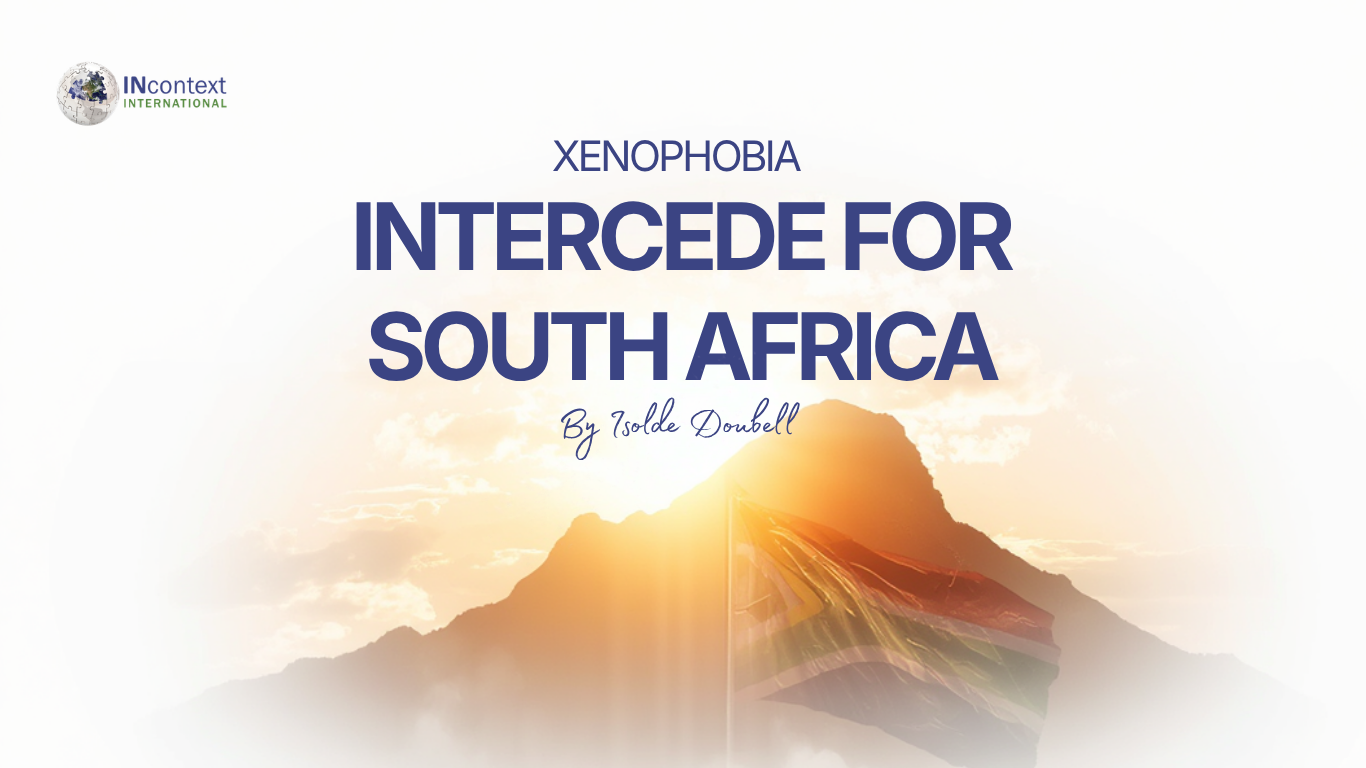
In South Africa, a wave of xenophobia that has been sweeping over the country from April to June has resulted in violence that has killed at least five people and caused a diplomatic rift with the rest of the continent. A deadline was imposed by the citizen-led activist group March and March for illegal migrants to leave South Africa, and threats of nationwide protests have been made. The deadline is today, 30 June. As Christians, we can trust God that it will not be a day of violence and destruction. President Cyril Ramaphosa confirmed that the police will crack down on groups behind xenophobic violence as anti-immigrant protests tarnish the country’s reputation.
March and March, which was founded in 2024, has drawn support from some politicians but has also raised concerns about rising xenophobic tensions. These concerns were shaped by South Africa’s history of violence against migrants, including attacks in 2008 and 2015, and the 2021 campaigns by Operation Dudula, a national movement that mobilised communities against foreign nationals through marches, forced shop closures, and violent attacks. These citizen-led movements portray foreign African migrants as responsible for South Africa’s socio-economic difficulties. Immigration is seen as competition for scarce resources, fuelling resentment and insecurity among citizens. Born out of frustrations with unemployment, crime, and poor service delivery, these movements channel local discontent into community-driven vigilantism.
However, according to The Economist of 25 June, research done by both the World Bank and the Organisation for Economic Co-operation and Development (OECD) has found that many foreigners are net job creators because they set up firms and add to consumer demand. The Helen Suzman Foundation, an NGO, has also found that foreigners commit fewer crimes on average than South Africans, and census data suggest that only around 5% of the population is foreign-born—a percentage that has not changed significantly in recent years. The Economist asks why there is such an extreme negative view of immigrants and suggests that either the data for poorer areas are not available to researchers, or people’s opinions are shaped by individuals with agendas that are not necessarily based on facts. The provinces with the greatest opposition to the immigrants are Gauteng and KwaZulu-Natal, where unemployment and Zulu nationalism also play a role.
The fact is that South Africa’s unemployment rate is very high, which contributes to people’s desperation and need to find a scapegoat. According to the Department of Statistics (https://www.statssa.gov.za/?p=19526) the national unemployment rate in the first quarter of this year was 32.7%. Those aged between 15 and 24 face the highest unemployment rate at 60.9%, followed by those aged between 25 and 34 at 40.6%. This is a staggering statistic, and we as the Church should pray earnestly for jobs to be created so that people in South Africa can escape poverty and be blessed with the opportunity to earn a living with dignity. When people are willing to work, there should be an environment that supports them.
Samuel Mampapatla, General Secretary of the National Informal Traders Alliance of South Africa (NITASA) said in an interview on Talk Radio 702 that he condemns violence, threats, and harassment against foreign nationals, but believes that many South Africans have legitimate concerns about illegal migration, pressure on public services, and competition for economic opportunities. “The root of our problems is that we have the laws and the regulations that are not effectively implemented.” He pointed out that if the correct measures were in place, the border management system would block illegal immigrants and continue to monitor legal immigrants. According to him, a major problem slowing the growth of South African entrepreneurs is that many municipalities have failed to process permits effectively, maintain proper records, and provide sufficient trading infrastructure. “The government has to create a conducive environment for its society to be able to succeed.”
How can we as Christians make a difference?
- By interceding for the government of South Africa:
1 Timothy 2:1-4, “First of all, then, I urge that supplications, prayers, intercessions, and thanksgivings be made for all people, for kings and all who are in high positions, that we may lead a peaceful and quiet life, godly and dignified in every way. This is good, and it is pleasing in the sight of God our Savior, who desires all people to be saved and to come to the knowledge of the truth.”
May the government have Godly wisdom to prevent criminal elements from exploiting the situation, to handle the country’s finances wisely, to create job opportunities as a matter of urgency (including in the private sector), to handle immigration effectively so that it does not become a threat to the citizens of South Africa, and to protect vulnerable legal immigrants.
- By praying against the criminal elements in South Africa and other people with agendas:
Jeremiah 22:3, “Thus says the Lord: Do justice and righteousness and deliver from the hand of the oppressor him who has been robbed. And do no wrong or violence to the resident alien, the fatherless, and the widow, nor shed innocent blood in this place.”
- Pray for the people of South Africa to turn to God in their need:
Mattthew 6:33, “Seek first the Kingdom of God and His righteousness and all these things will be added to you.”
Psalm 9:8–10, “He will judge the world with justice and rule the nations with fairness.
The Lord is a shelter for the oppressed, a refuge in times of trouble. Those who know your name trust in you, for you, O Lord, do not abandon those who search for you.”