By Elvira Hattingh
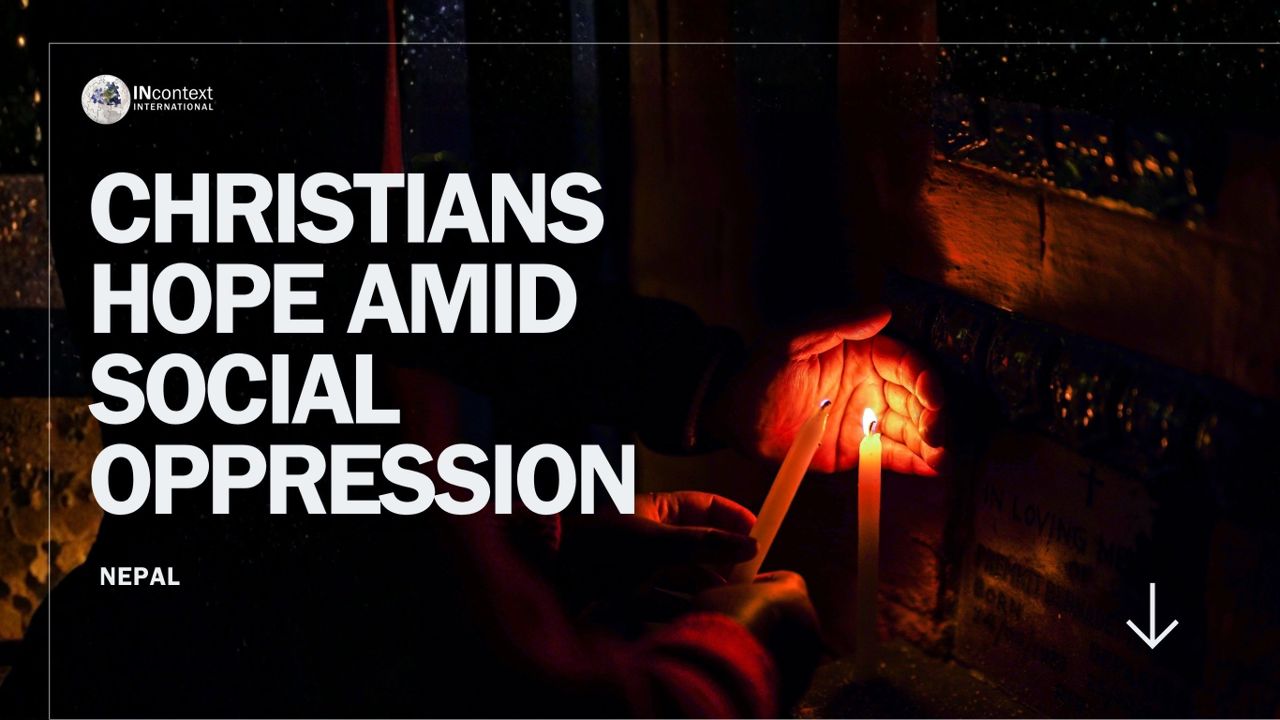
Christians in Nepal are hoping for reduced corruption and greater economic opportunity after the Rastriya Swatantra Party (RSP) secured a landslide victory in the 5 March general election, with Balendra “Balen” Shah, the 35-year-old rapper-turned-politician, positioned to become the next Prime Minister.
Although Christians do not anticipate greater freedom, they also don’t see any political appetite for restricting religious freedom, with one source saying the majority of the people do not care strongly either way about changing religious freedom laws.
This is a first since the Gen Z-led protests in September 2025 toppled the previous government amid widespread anger over corruption, nepotism, and political stagnation.
However, in Nepal, Christians have been facing a precarious existence amid a predominantly Hindu society where religion, culture, and family identity are tightly intertwined. Legal restrictions, including anti-conversion laws, limit public expression of faith, while social discrimination—from pressure to participate in Hindu rituals to being ostracised over beliefs—remains common.
According to Nepal’s official 2021 census (results released in 2023), Hinduism is the dominant religion at 81.19%, followed by Buddhism at 8.21%, while Christianity accounts for just 1.76% of the population.
Hindu Woman Finding Jesus
A Nepal-born woman who converted to Christianity says she continues to face pressure from her Hindu family and the wider community, illustrating the challenges Christians face in Nepal.
Raised in a strict Hindu household, she recalls being deeply devoted from a young age. “When I was Hindu, I was very passionate. I went to every mandir—every Hindu temple. I performed puja and also fasted during Navaratri, which is nine days of fasting in our culture. But I always felt something was incomplete. Growing up, I always wanted to find the real God.”
Her exposure to Christianity began through a Christian uncle. While studying in Kathmandu, she lived with him and one day attended a church service with her aunt. “A pastor was preaching about the gospel, and he said quietly: ‘If you want to believe in God, ask Him, ‘God, are you here?’ So I prayed like that. I said, ‘Hindu God, please forgive me. I just want to ask Jesus this question: God, are you here? Please show me.’”
Initially, she continued praying to both Hindu gods and the Christian God, but through her searching and prayer, she eventually felt that He had touched her. “I was convinced that He is the only true and real God. From that day on, I began to follow only Jesus.”
Social Discrimination at Home
Her and her husband’s extended family remain Hindu, and she says they experience pressure to conform to traditional rituals. “We get bullied and forced to take part in Hindu traditions. It is very difficult to go to church or meet other Christians, or gather in a home. They would force us to do Hindu things.”
Her husband sometimes challenges his mother, whilst she usually avoids confrontation. “At home, when my mother-in-law tells me not to do something or not to go to church, I usually stay quiet. I don’t argue with her. I simply remain calm and go to church.”
She also describes the unequal treatment of her sister-in-law, who is Hindu. “My mother-in-law is very supportive of my sister-in-law because she is Hindu. I put in all my effort to make her happy; I do all the housework and serve her in many ways, but she always scolds me or has a complaint about me.”
Faith Amid Pressure
Despite these challenges, her belief remains firm. “I feel that God loves me as no one else can. He is with me always. He made the whole world and even those who don’t believe in Him and are fighting with us over our Christianity.”
She knew Pastor Keshab Raj Acharya, who was arrested under Nepal’s anti-conversion laws in 2020 for a video where he prayed for healing during COVID-19. “He preached that God could heal people and protect them from the disease. Someone complained to the police, and he was arrested.
“Because of this law, we cannot openly preach the gospel. We cannot say out loud that God is real, nor can we openly say that we go to church or speak too much about Him in a community. Only when we become good friends with people can we slowly and carefully be more open about this and talk to them about God. If we talk openly and someone complains, we may be imprisoned.”
She also notes influence from India, where the BJP government and groups like Shiv Sena support Hindu identity. “Some of this influence reaches Hindus in Nepal as well, which sometimes makes people more aggressive toward Christians.”
Also in Nepal, cows are sacred and slaughtering them is illegal. “Many people say Christianity is a foreign religion and that we eat cows. It goes so far that they will not touch us because of that. Some will not even eat food that they believe was touched by a Christian. My mother-in-law even told me that, as a Christian, I cannot touch her body when she dies.”
Despite Nepal’s constitution, which guarantees religious freedom, Christians report social discrimination. “Although we have the right to our religion, we are facing strong social discrimination in the community because we are Christians. Sometimes people consider our religion to be inferior.”
Churches “Illegal”
Another anonymous source, says the new government has raised hope that corruption will be addressed. “The country was previously governed with an old worldview, a very old, ancient way, so there was tremendous corruption. The people hope that the economy will improve.”
She says both Hinduism and Buddhism have historically coexisted in Nepal, deeply woven into culture and family life. Religious tourism is a significant source of national income, making the population protective of tradition and wary of conversions. “They want to protect both their faith and their economy. That’s why the anti-conversion law is there,” she explains.
Churches in Nepal often cannot register as legal entities.
Please join us in prayer:
- Leaders: Pray for Nepal’s leaders to have wisdom, integrity, and hearts open to God.
- Believers: Pray for courage and steadfast faith for Christians facing pressure and discrimination.
- Ministry: Pray for safe, effective outreach and the growth of Christian communities.