By Isolde Doubell
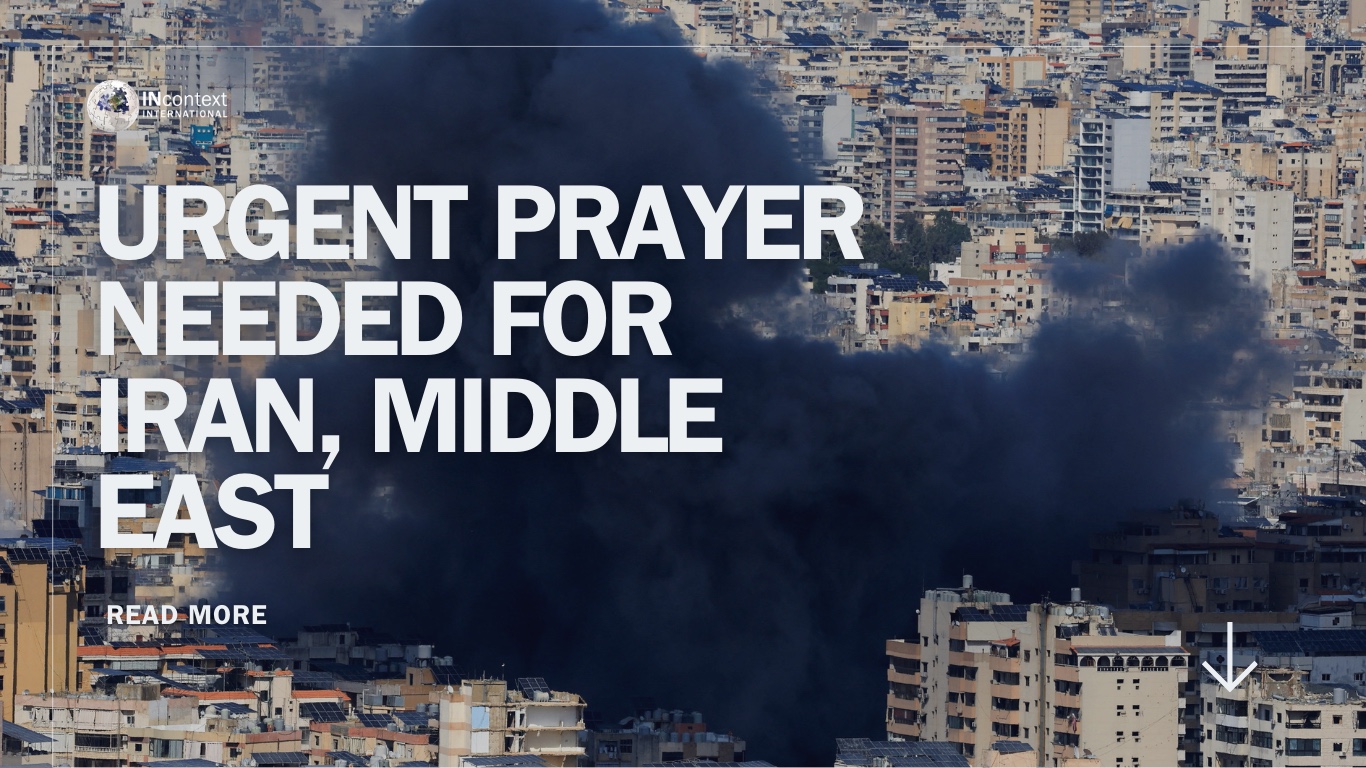
War has erupted across the Middle East this week after Iran’s Supreme Leader, Ali Khamenei, and several top officials were killed in an extensive wave of airstrikes by Israel and the United States. Hundreds of targets were hit across the country, including the Ayatollah’s compound in Tehran. Israel and the U.S. continue to bomb military and strategic sites in Iran, while Iran-aligned Hezbollah has launched rockets at Israel from Lebanon. Israel has been responding with airstrikes on Beirut, causing panic and displacement among at least 300,000 Lebanese. Lebanon already has the highest concentration of refugees per capita in the world, hosting about 1.5 million Syrians among a population of about 4 million Lebanese people.
Israel and the U.S. have made it clear that they will keep fighting until their objectives are achieved. According to Israel, the campaign is moving according to plan. Iran has been retaliating, striking targets in neighbouring Gulf countries and has closed the Strait of Hormuz, a vital route for about a fifth of the world’s oil and liquefied natural gas trade, which could drive up global energy prices and put diplomatic pressure on the U.S. and Israel.
So far, the conservative clerical leaders of Iran have shown no sign of yielding power. Military experts say that U.S. and Israeli air power, with no armed force on the ground, may not be enough to drive them out. Khamenei’s killing on 28 February during Ramadan coincided with the Jewish Sabbath and the beginning of the Jewish Festival of Purim. Purim commemorates the biblical account of Queen Esther, who discovered Haman’s plot to destroy the Jewish people through her uncle, Mordecai. Haman was an evil administrator at the court of King Ahasuerus of Persia. Esther appealed to King Ahasuerus on behalf of her nation, risking her own life. The result was that Haman was executed, and the Jews were granted the right to defend themselves and overcome their enemies. There is a parallel: just as Haman was hanged for seeking to annihilate the Jews of Persia, Khamenei—who had vowed to destroy Israel—died on the very day that recalls their deliverance.
The Iranian people are still reeling from the trauma of the nationwide protests in January, when thousands of people were killed in a violent government crackdown. Human rights groups estimate that several thousand protesters died, with some reports suggesting the toll may be far higher. More than 18,000 people were arrested. We as a global Church can stand with them during this time of upheaval and pray that God will direct their steps. During times of upheaval in Iran, Christians are often at greater risk because they are seen as enemies of the state and suspected of being spies. The people who were arrested are especially vulnerable at this time. When people in the Middle East come to Christ, there are often testimonies of Jesus appearing to them in dreams. We pray that in this time—both in Iran and across the Gulf nations under attack—those who are fearful and unsettled will encounter Jesus, whether in dreams or through the witness of Christians who, by God’s mercy and power, live as salt and light among them. May this season of war also become a season of harvest for the Kingdom of God.
Open Doors reports prayer requests from inside Iran on their website. One Iranian Christian said, “I cannot ignore that under the Ayatollah’s leadership the Church in Iran lived for decades under intense pressure, facing restrictions, surveillance, arrests and the constant weight of uncertainty. Many faithful believers endured suffering simply for following Christ. Yet even in hardship, the Church has remained resilient, prayerful and deeply rooted in hope. This moment is not about revenge or triumph, but about the possibility of a different future. One where freedom of conscience, dignity and justice are extended to all Iranians, regardless of faith or background. My prayer is that this turning point will open the way for peace, reconciliation and genuine freedom for our nation.”
An Open Doors partner in Iran added, “I speak with a heavy heart. I do not celebrate war, nor do I take lightly the suffering it brings to ordinary families—in Iran, in Israel and across the region. Every life is precious before God. Yet as an Iranian, I also cannot ignore the deep longing for freedom that has lived in the hearts of our people for generations. If this painful moment becomes a turning point toward justice and true liberty, then my prayer is that it leads not to greater destruction, but to the restoration of dignity, hope and peace. As followers of Christ, we pray for the protection of the innocent, for restraint among leaders, and for a future where Iran and the region may know freedom without fear. May God bring light out of darkness and peace out of turmoil.”
Dr Daniel Shayesteh, an Iranian born and founder of Exodus from Darkness Ministries, says that at this time he is reminded of the prophecy in Jeremiah 49:34–39 which refers to Elam, often linked to ancient Persia and modern Iran. The prophecy shows that God humbles oppressive rulers but still has a plan of redemption for the nation. It says that He will scatter the people and later set His throne there. “After the ayatollahs took power, many Iranians were scattered worldwide, and millions have since come to Christ, preparing the way for His kingdom. The passage ends with God’s promise: ‘Yet I will restore the fortunes of Elam in days to come.’ God never abandons His people. My ministry seeks to prepare Iranian believers to share the hope of Christ and to show that true freedom is found only in Him. I trust that the Lord will continue to open doors so that many Iranians can present Christ clearly—in faith, thought and life—and invite others to follow Him. We pray for a future when the Islamic regime will no longer rule Iran and Christians can live openly among their people. But even if the regime stays in power, the Gospel will still touch hearts and change lives. In fact, under the ayatollahs’ rule, millions of Iranians have come to Christ. History shows that while oppressive systems may increase persecution, they cannot put out the light of the Gospel. The Christian faith has proven again and again that though it may bring suffering, it always leads to victory.”
Please join us as we pray for Iran and the war in the Middle East:
- Pray that God’s Kingdom will come in the Middle East like never before, and that many will encounter Jesus in dreams and through the witness of Christians.
- Pray for the Iranian people who have endured much trauma and hardship for decades, but especially this year. Pray that they will experience God’s guidance, comfort and protection.
- Pray for the Christians in Iran who are in prison. Pray for their release and that they will experience strength and protection from evil.
- Pray for the underground Church in Iran and many of the countries affected by the war, that they will hear God clearly and be as wise as serpents and innocent as doves (Matthew 10:16).
- Pray for the people who are displaced at this time, for food, water and safety.
Sources:
https://iranhr.net/en/articles/8529/
https://apnews.com/article/iran-protests-us-israel-war-nuclear-economy-1b2368e0804676d33d6aa0696815a102
https://www.euronews.com/2026/01/27/iran-protests-death-toll-could-surpass-more-than-30000-reports-claim
https://www.opendoorsuk.org/news/latest-news/iran-urgent-prayer/
https://www.youtube.com/watch?v=D5TYdkLwhYI