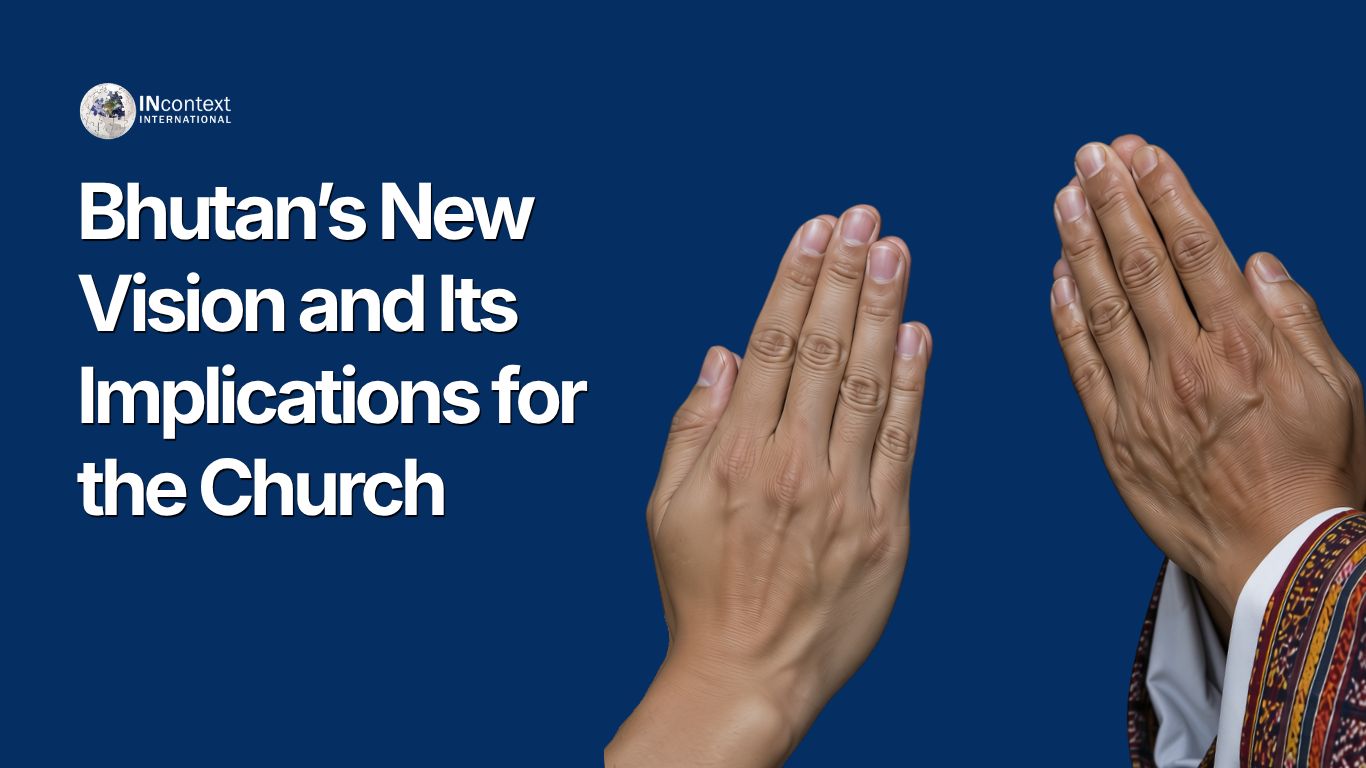
As Bhutan embarks on an ambitious development project rooted in its Buddhist heritage, what could the new city mean for the country’s Christian community and the spread of the Gospel?
Bhutan, a Himalayan kingdom known for its Buddhist heritage and emphasis on Gross National Happiness, is pursuing an ambitious project that seeks to shape its economic future while preserving its spiritual identity. Gelephu Mindfulness City (GMC), envisioned by King Jigme Khesar Namgyel Wangchuck, aims to attract international investment, create employment and encourage young Bhutanese living abroad to return home.
On 1 November 2026, tens of thousands of people gathered to build 108 Buddhist stupas near the Indian border as part of the project. The event highlighted the importance of Buddhist spirituality in the vision for GMC, which seeks to bring together economic development, cultural identity and religious heritage.
GMC is planned as a Special Administrative Region with its own governance structure. The vision includes renewable energy, environmentally friendly industries, technology and artificial intelligence, and a modern financial system. It is also intended to reflect Vajrayana Buddhist philosophy and the principles of Gross National Happiness.
What Could This Mean for Christians?
Bhutan’s Constitution provides for freedom of thought, conscience and religion, while also identifying Buddhism as the country’s spiritual heritage. However, the practical experience of religious freedom can be more complicated for minority communities.
A friend of INcontext who lives in Bhutan believes that religious freedom is not experienced equally by all religious communities in the country. In their view, while different Buddhist traditions and Hindu communities enjoy religious freedom, this does not extend to Christians in the same way.
Christians make up a small minority of Bhutan’s population and face challenges in practising and expressing their faith openly. Open Doors has highlighted restrictions on church registration and public Christian activities, as well as the social pressure experienced by those who convert to Christianity. These challenges raise questions about how GMC’s development could affect the country’s Christian community.
What Could This Mean for the Church?
The interviewee sees possible opportunities for Christians from outside Bhutan to visit the country, including through short-term prayer visits to GMC. They also suggest that longer-term opportunities could arise for Christian families interested in establishing businesses or spending time in Bhutan for research. In their view, such visits could provide opportunities to pray for, encourage and strengthen local Believers.
However, they are concerned that if the city becomes increasingly shaped by Vajrayana Buddhist beliefs and practices, it could become more challenging for Christians to share their faith and for churches to carry out their activities.
The future impact of GMC on Christians and mission in Bhutan remains uncertain. Much will depend on how the city develops and how its policies affect the country’s religious communities.
How Can the Church Respond?
As this ambitious project takes shape, the global Church can remember Bhutan and its small Christian community in prayer. The interviewee encourages Christians outside Bhutan to continue visiting the country through prayer-tour groups, using these opportunities to encourage, strengthen and motivate local churches. Despite the uncertainties surrounding the future, they remain hopeful, saying: “God is in control, and that is our hope.”
PRAYER FOCUS
- Pray for Bhutan’s leaders as they make decisions about Gelephu Mindfulness City’s future. Ask God to guide them towards policies that respect the rights and freedoms of all communities.
- Pray that Christians in Bhutan will not be compelled to bow down before idols or forced to contribute financially towards the construction of Buddhist or Hindu temples. Ask God to protect Believers from pressure to participate in religious practices that conflict with their faith.
- Pray for strength, steadfastness and unity among Bhutanese Christians, and that local churches will have opportunities to grow, encourage one another and share the Gospel freely.