By Isolde Doubell
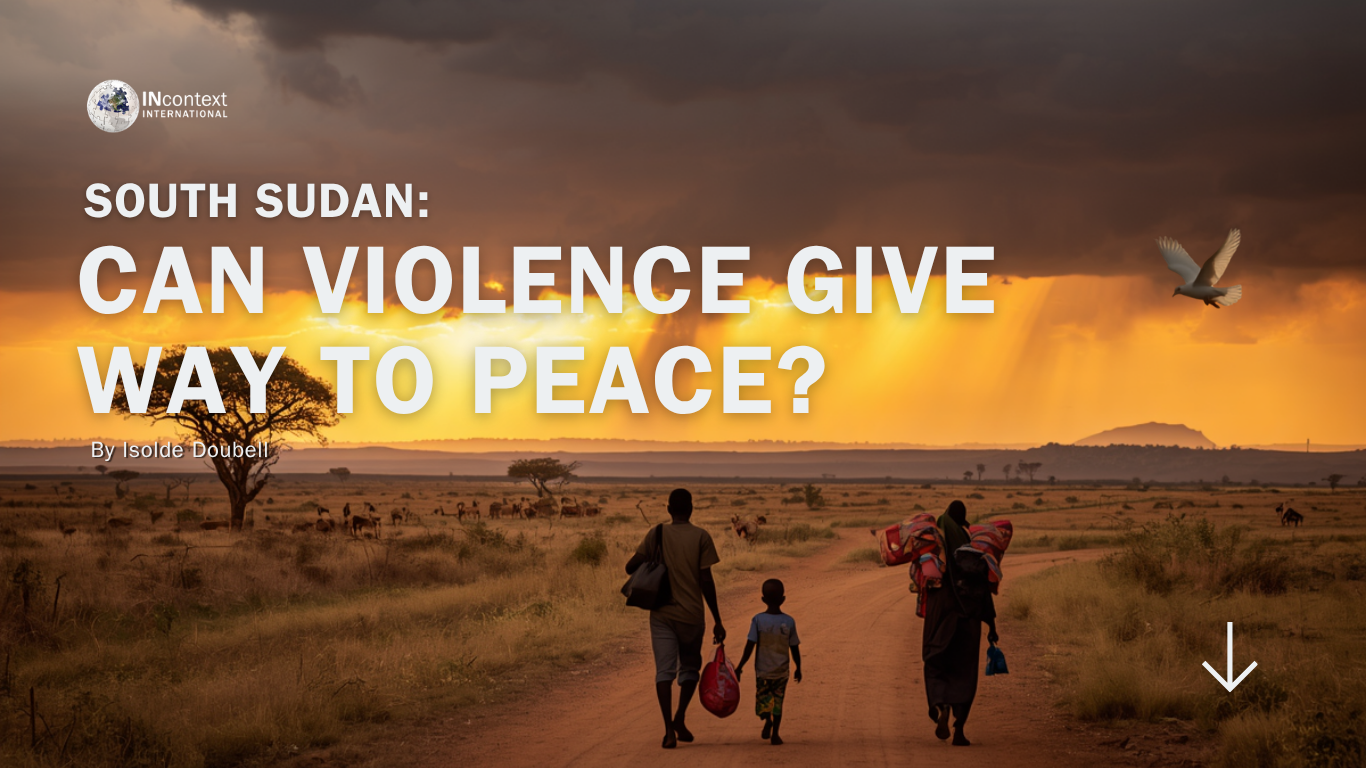
Fifteen years after gaining independence, South Sudan remains one of the world’s most fragile nations. Although the 2018 Revitalised Peace Agreement formally ended the country’s devastating civil war, clashes between the rival forces of President Salva Kiir and his long-time rival, First Vice President Riek Machar, who has been under house arrest since 2025, have continued, and millions of people are caught in one of the world’s worst humanitarian crises. South Sudan is home to approximately 12 million people, and more than seven million face acute food insecurity, while millions have been displaced by conflict, both within South Sudan and across its borders. Despite significant oil reserves and abundant natural resources, years of conflict, corruption, and weak governance have prevented most citizens from sharing in the country’s wealth. Now the country consistently ranks among the poorest and most corrupt in the world, leaving countless families dependent on humanitarian assistance for survival. The United Nations and regional leaders have repeatedly warned that South Sudan risks sliding back into full-scale civil war.
The country is also grappling with a lingering cholera outbreak that has been the worst that South Sudan has seen. Unfortunately, the war has also severely impacted humanitarian organisations. Doctors Without Borders, known as Médecins Sans Frontières (MSF), had to close its Lankien hospital in Jonglei State following a government airstrike in February this year. The destruction of the hospital, which served 250,000 people, left 26 MSF staff members missing. Since 2025, MSF has experienced over 12 direct attacks on its medical facilities and staff in South Sudan, leading to the permanent closure of four hospitals. UNICEF has also recorded the closure of 17 health facilities across the country due to conflict, with associated nutrition services suspended. The organisation has expressed extreme concern for women and children impacted by violent clashes, as these areas have some of the highest levels of child malnutrition.
Pope Francis’ Plea for Peace
One of the most memorable appeals for peace came in April 2019, when the late Pope Francis hosted South Sudan’s rival leaders at a spiritual retreat in the Vatican. Salva Kiir is a Roman Catholic and Riek Machar grew up in the Presbyterian Church. At the conclusion of the gathering, the Pope knelt and kissed their feet, pleading with them to pursue reconciliation instead of conflict. He urged them to “seek what unites you, beginning with the fact that you belong to one and the same people, and to overcome all that divides you,” and told them he was praying for them to become peacemakers, who “build peace through dialogue, negotiation and forgiveness.” He also visited the country in 2023. Yet despite these extraordinary efforts, war and instability have prevailed in South Sudan. More than half of South Sudan’s population faces acute food insecurity, while millions depend on humanitarian assistance for their daily survival.
A Friend of INcontext, who has worked closely with believers and ministries in South Sudan, highlights several realities that help us understand the country and pray more specifically.
● South Sudan is deeply tribal. Tribal identity often takes precedence over national identity, and longstanding rivalries continue to influence politics and conflict. President Salva Kiir belongs to the Dinka, South Sudan’s largest ethnic group (and interestingly, one of the tallest ethnic groups in the world), while Riek Machar is from the Nuer community, historically one of the Dinka’s principal rivals. May the people of South Sudan encounter Jesus Christ personally so that the Holy Spirit can break spiritual strongholds, heal divisions, and unite people across tribal boundaries.
● Political uncertainty fuels instability. South Sudan has never held a national election since gaining independence in 2011. Salva Kiir has been president for 15 years. Elections have been postponed several times and are now scheduled for 22 December 2026. When announcing the date for the vote, electoral chief Abednego Akok Kacuol acknowledged that unresolved legal amendments and persistent funding gaps continue to hamper poll preparations. Our friend observes that the election brings uncertainty, unrest, and political tensions.
● The refugee and displacement crisis continues to grow. Since war broke out in neighbouring Sudan in April 2023, more than one million people have crossed into South Sudan. Many are South Sudanese who had previously sought refuge in Sudan and have now returned home, while others are Sudanese refugees fleeing the conflict. Their arrival has placed enormous pressure on already stretched food supplies, healthcare, and local communities. At the same time, renewed violence inside South Sudan has displaced hundreds of thousands more people.
● The Gospel remains welcome. Many South Sudanese identify as Christians, but faith is often cultural rather than deeply rooted. Animism is still very prevalent. However, despite the hardships, South Sudan remains wide open to the Gospel, especially in comparison to other countries in the region. Our friend remarks, however, that serving there requires a very specific calling because of the security risks, difficult living conditions, poor healthcare, and financial challenges.
Many Christian ministries, NGOs and humanitarian agencies are faithfully serving the people of South Sudan despite the overwhelming challenges. There are several organisations working in the refugee camps, some providing technical training, start-up grants, and digital access, others installing solar-powered water systems, still others providing education and trauma-healing services, etc. Some are faith-based, like Empower One, which has planted churches in Sudan, the DRC and South Sudan. They established a seminary in 2007 to train local leaders for these churches. Alongside Biblical and theological education, students receive practical training in leadership, education, business administration, healthcare and water management, equipping them to serve both the spiritual and practical needs of their communities.
Please join us in prayer:
● Pray that South Sudan’s leaders would choose peace over violence and that God would heal tribal divisions and bring genuine reconciliation among the country’s people. Pray also as the country prepares for elections, that political differences would not lead to renewed conflict.
● Pray for protection, provision and hope for displaced families and those facing severe hunger. Pray that the hospitals and people assisting the displaced and the millions of people in need, will not be attacked.
● Pray that the Church in South Sudan will become a powerful witness to Christ both in word and deed, that it will proclaim the Gospel without compromise and serve communities living under extremely difficult circumstances. Pray that many South Sudanese would come to know Jesus Christ personally and grow in truth and hope.
Sources:
https://incontextinternational.org/2026/02/09/south-sudans-growing-crisis/
https://www.bbc.com/news/articles/c7933p4xe7po
https://www.bbc.com/news/articles/c4gyl1n332po
https://www.msf.org.za/news-and-resources/latest-news/26-msf-staff-members-remain-missing-lankien-south-sudan
https://www.aljazeera.com/news/2026/7/9/south-sudan-15-years-on-still-fighting-for-peace
https://www.unicef.org/press-releases/lives-malnourished-children-risk-upsurge-violence-south-sudan